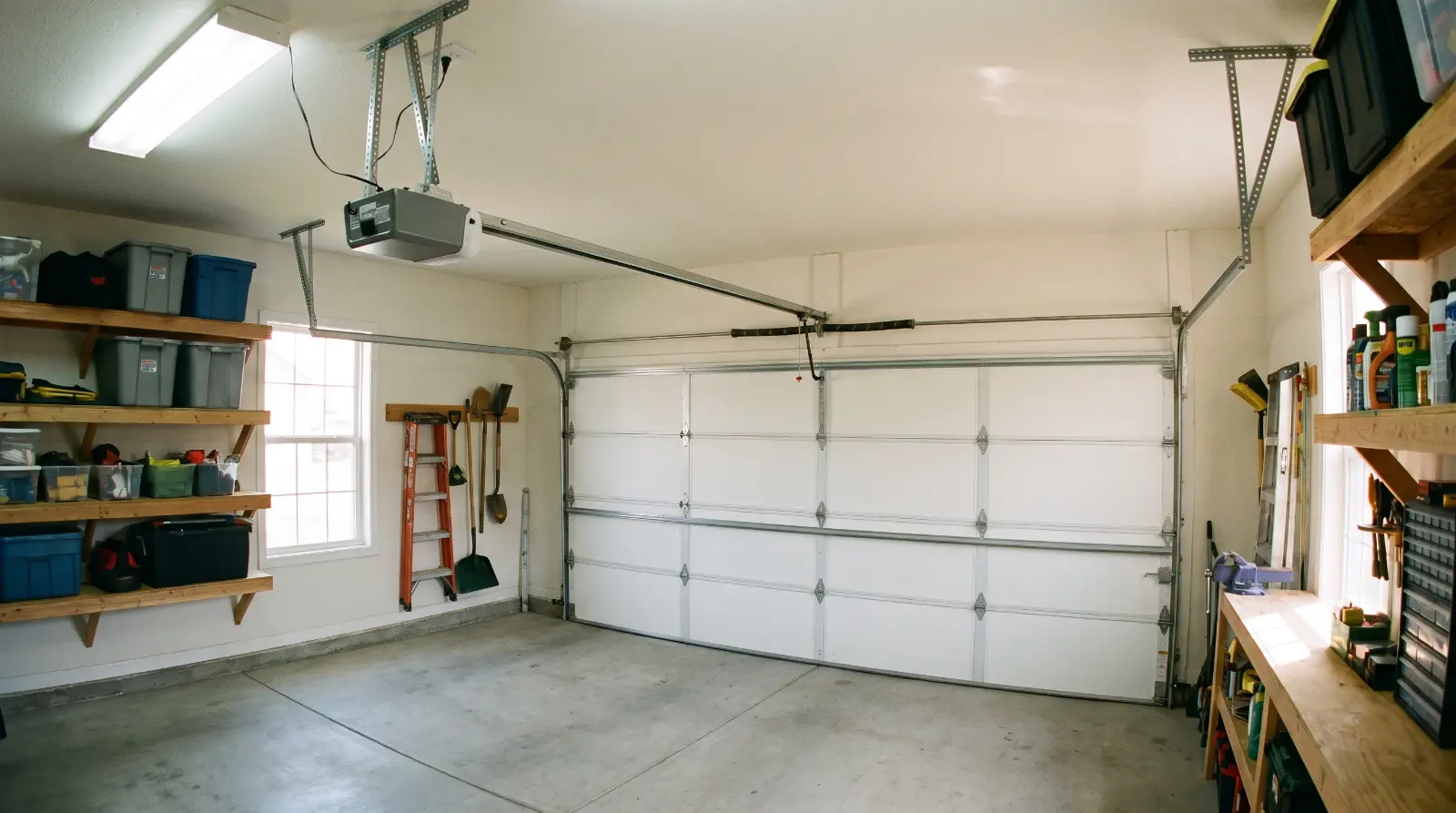
When a garage door won't move, the opener gets blamed first. Sometimes it really is the opener. Just as often, the opener is fine and it's straining against a broken spring, a frozen bottom seal or a door that came off track. This page helps you tell the difference, covers the checks that are safe to do yourself, and explains when a repair makes sense and when it's time for a new opener.
Signs the opener is the problem
- It hums but nothing movesOften a stripped drive gear or a failed start capacitor inside the motor unit.
- It clicks or does nothing at allCheck power first. If it has power, the logic board or wall control may have failed.
- The motor runs, the door stays putThe trolley may be disconnected from the chain or belt, or the drive gear is stripped.
- The remote works only up closeA weak battery, a failing antenna, or interference from new LED bulbs in the opener.
- It's suddenly much louderA loose chain, worn sprockets, or the opener working too hard because the door is out of balance.
- It reverses for no reasonUsually the floor sensors, sometimes a force setting that needs adjusting after cold weather stiffens the door.
Quick checks you can do safely
- Power. Is the opener's light working? Check the outlet, the breaker, and any GFCI outlet in the garage, which can trip after a storm or when a space heater is on the same circuit.
- Lock or vacation mode. Many wall controls have a lock button that blocks the remotes. It's easy to bump by accident.
- Batteries. Swap the remote and keypad batteries. Cold drains them faster.
- Sensors. The two small sensors near the floor should each show a steady light. Wipe the lenses and make sure nothing is in the beam.
- Is the door balanced? Only with the door fully closed, pull the red release cord and lift the door by hand. If it's heavy or won't stay halfway, stop. That's a spring or cable problem, not the opener. Read broken garage door springs.
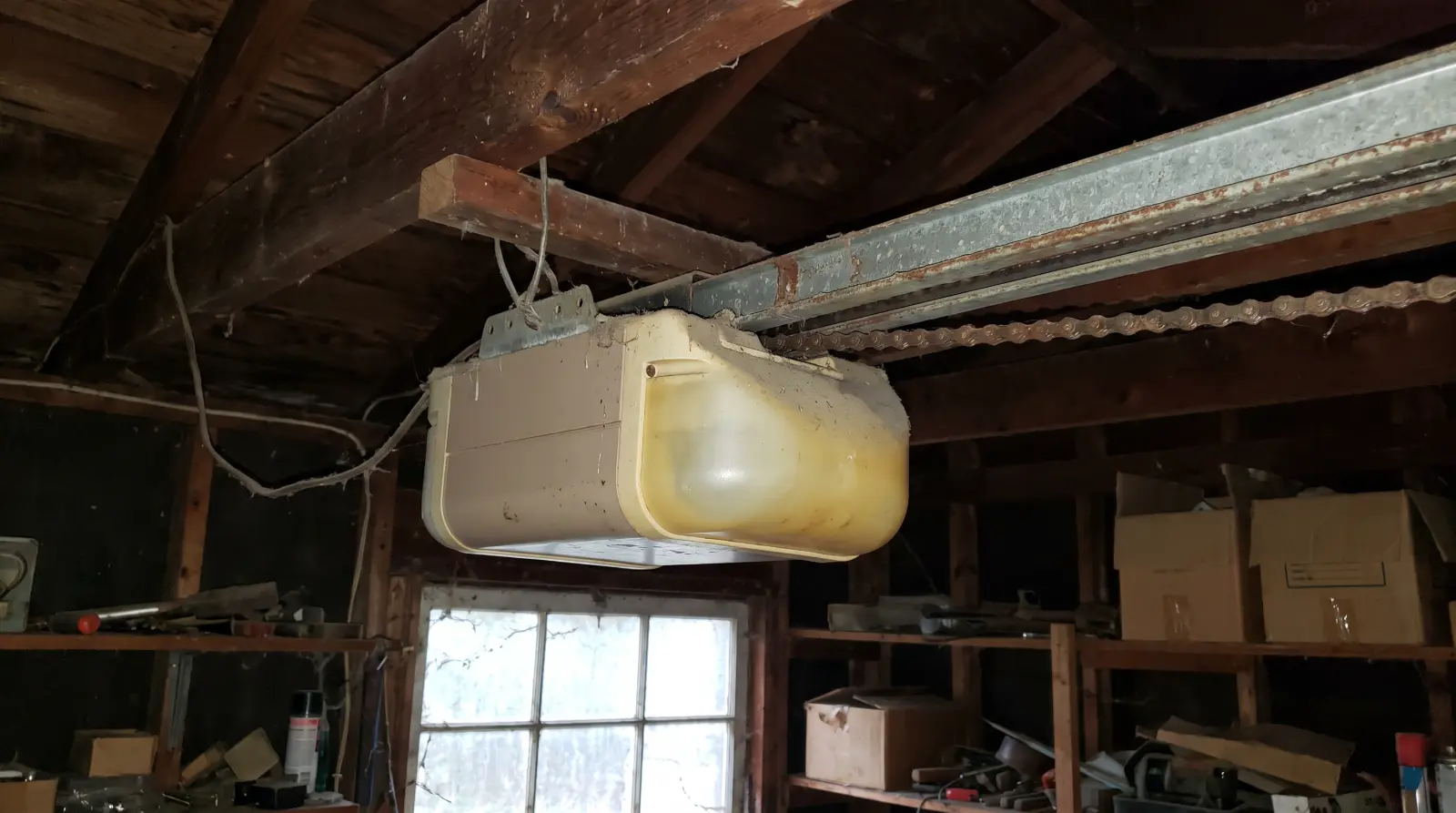
Repair the opener, or replace it?
Repair often makes sense when
- A single part failed: a drive gear, a sensor, a wall button, a logic board or a remote
- The opener has safety sensors and reverses when it touches an obstruction
- Parts for the model are still easy to get
Replacement is usually the better call when
- The opener has no safety sensors near the floor. Openers sold in the US since the early 1990s must have entrapment protection, and an opener without it is a real hazard around kids and pets.
- The remotes use an old fixed code, which is far less secure than modern rolling-code systems
- The motor itself is failing, or repairs keep stacking up
- You want something quieter because there's a bedroom over or next to the garage
Chain, belt or wall-mount
Chain drive openers are tough and common, but loud. That matters less in a detached garage out back and more in a tuck-under garage below a bedroom. Belt drive openers work the same way with a reinforced rubber belt and are much quieter. Wall-mount (jackshaft) openers sit beside the door on the torsion bar instead of hanging from the ceiling, which helps in older garages with low ceilings or not much room above the door.
Brockton-area opener problems we hear about
Cold mornings. Grease in the opener and on the door stiffens in the cold, so the opener needs more force to move the door. Some openers read that as an obstruction and reverse. A technician can check the force settings and lubricate the door properly.
Storm power flickers. A nor'easter that knocks power on and off can leave a logic board confused or a GFCI tripped. Check the GFCI first, then unplug the opener for a minute and plug it back in.
Detached garages. Many older detached garages were wired with a single outlet for a light, and the opener ends up on an extension cord or a shared circuit. Loose connections there cause odd, intermittent behavior that looks like an opener fault.
How long it takes
Most opener repairs, like a gear kit, sensors or a new wall control, are done in one visit. Installing a new opener usually takes a few hours, a bit longer if the garage needs a new outlet or if the door itself needs adjusting so the new opener isn't fighting it.
Questions to ask about opener work
- Is it the opener, or is the door out of balance? Can you check the springs too?
- Can this opener be repaired, and are parts available for it?
- If I replace it, which drive type fits my garage and my ceiling height?
- Will you set the force and test the safety reversal before you leave?
- Will my existing remotes and keypad work, or do they need replacing?
- What warranty comes with the motor, the parts and the labor?
If the door is completely stuck, start with garage door won't open or close, which walks through the most likely causes in order.
Questions people ask
How do I know if it's the opener or the door?
Pull the red release cord only when the door is fully closed, then lift the door by hand. If it moves smoothly and stays put about halfway up, the door is balanced and the problem is likely the opener. If it's heavy or drops, the problem is the springs or cables, so stop and call.
Why does my opener hum but the door doesn't move?
Common causes are a stripped plastic drive gear inside the opener, a failed capacitor, or a door that's too heavy to lift because a spring broke. Check the spring before blaming the opener.
Is it worth repairing a very old opener?
Sometimes. A worn gear or a sensor swap can keep a solid opener running for years. But if it's old enough that parts are hard to find, has no safety sensors, or uses an old fixed-code remote, a replacement is often the better call. Ask the technician to walk you through both options.
My remote stopped working in the cold. Is the opener broken?
Try a fresh battery first. Remote batteries weaken in the cold. Also check whether the lock or vacation button on the wall control was switched on by accident.
More in our garage door FAQ.